
The wind is even more disconcerting at night. We spent our first night in France listening to the corrugated iron and old Renault something bonnet stir and grumble on top of our caravan in the Mistral wind. Needless to say we were tired and grumpy on Sunday morning and couldn’t really be arsed with carrying our gear 500 vertical metres to the Céüse massif. But it was worth it.
Céüse is sold as France’s best sport climbing venue with a catch, the catch being the 1-hour uphill approach. It’s quite an exhausting catch and one that puts people off going there with the qualifying ‘…but the walk-in’.
In fact, even those who overcome the ‘… but the walk in…’ stage and make it all the way up the hill to Céüse haven’t necessarily made their peace with the effort involved. To be fair, we did doubt the decision as we bush-whacked our way up the steepest section, but we overheard one particularly fatigued American climber proclaiming that Céüse would be perfect if only there were a road leading right up to it from Les Guerins. Hmm…
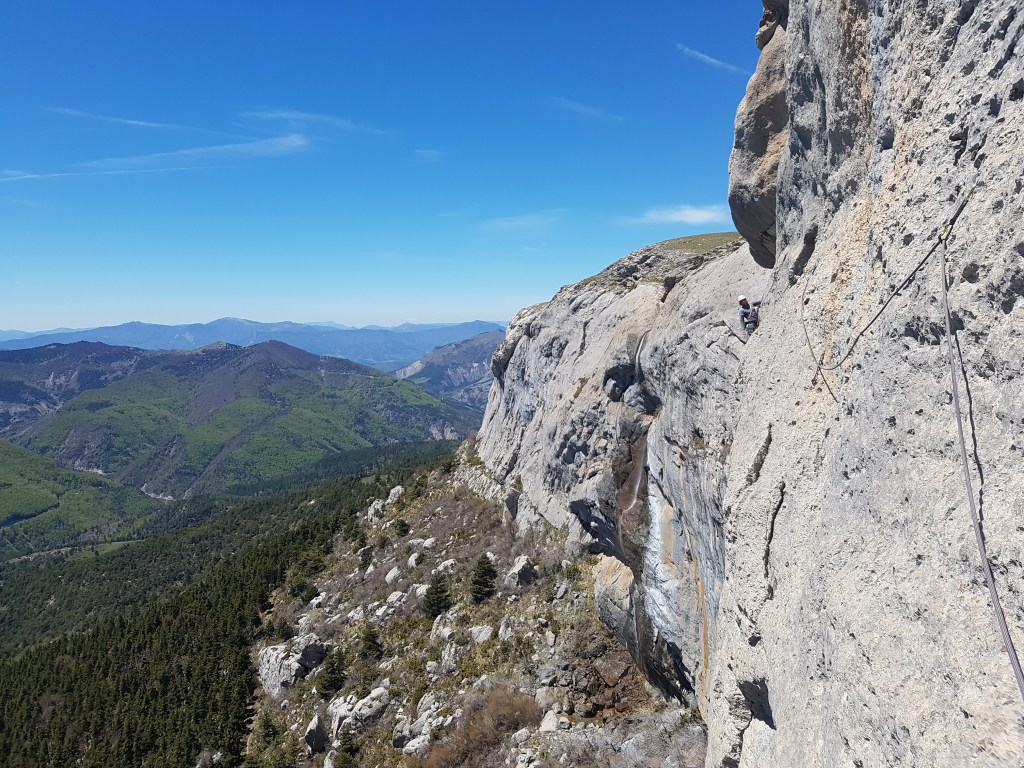
Les Guerins’ charm is that it’s quiet and out of the way. You wouldn’t pass through it on your way to somewhere else. In fact it’s the end of the line on that windy mountain road so you couldn’t even if you wanted to. There are no bustling Wednesday markets, no shops for supplies, and a German man complained at the lack of scene at the campsite. It’s warm in the sun and cold at night and if you’re in it for the climber’s bars – or any sort of bar really – you should go elsewhere.
All in all, climbing in Céüse requires effort. Effort getting to the crag. Effort buying supplies. Effort. But that’s what’s so great about it: all that effort meant that no one was there. The rock was grippy, unpolished and untarnished with build-up of chalk. In the time we spent traversing two sectors on a multi-pitch, we saw and heard only the birds. All this got me thinking…
There’s a strange phenomenon in climbing and outdoor pursuits at the moment. Let’s call it Participation versus Sustainability. The first part is where we encourage others to climb. We can’t understand why they don’t – what do people do with their time when not climbing? What happens on non-climbing holidays?
Then people start to climb. And with more people climbing come the unanticipated yet logical consequences: busier crags, queuing for routes, no more ‘leave no trace’, erosion, litter, access disputes – we begin to question whether all these people climbing is sustainable. This isn’t because the new climbers are all dickheads who leave their rubbish lying everywhere. It’s because the more people there are doing a thing, the more we notice that people are doing that thing.

If you get bad weather in Céüse, you can always go to Orpierre.
Driving up to Orpierre was like leaving deserted saloon and finding yourself in Las Vegas casino. The village is built around climbing tourism; we saw Petzl flags, climbing posters, climbing billboards, climbing books in the supermarket, a climbing wall, a bar with a pizza oven, mini-vans, signposts, school groups and – of course – a scrittly road hairpinning all the way up to the uppermost crags – the one thing that Céüse was lacking. Orpierre is rock climbing at its most convenient and accessible.
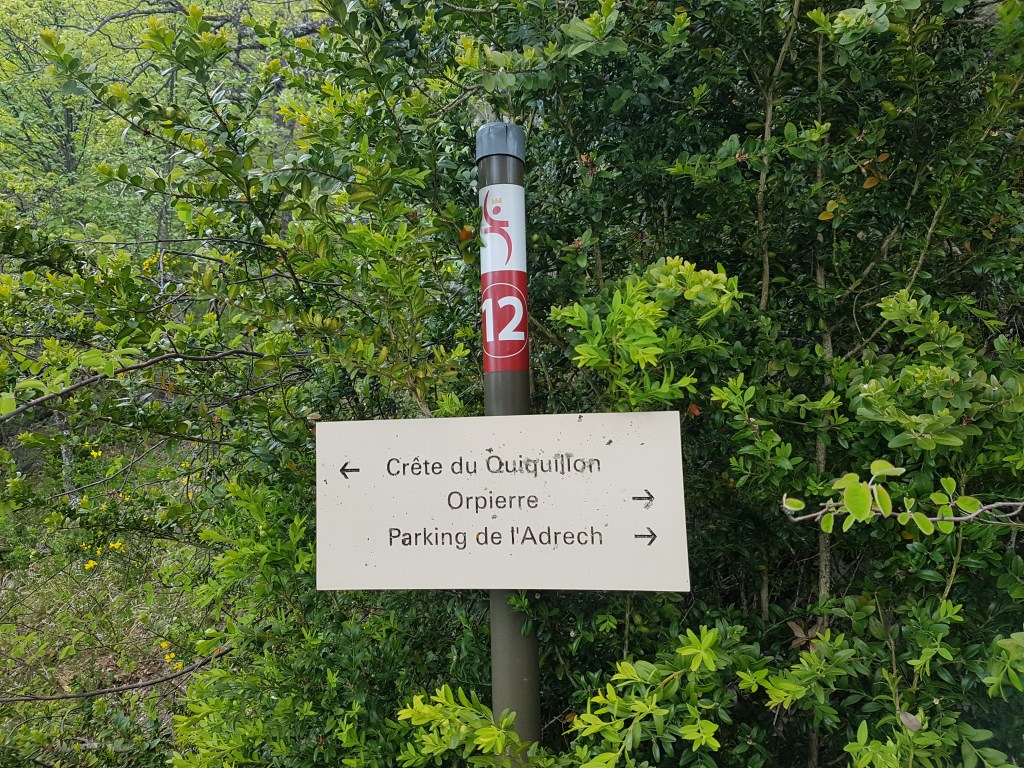
There are consequences to making things convenience and accessible, Orpierre is the proof in the pudding. The rock is polished, the holds chalky and there were directional markings painted on the rock 3 pitches up a 150 metre face. Rather than the swooshing of diving swallows, we listened school groups and honking traffic. We really enjoyed climbing there, but we missed the ambience that we were rewarded with upon trekking up to Céüse.

This puts us in a moral pickle. As someone who was not brought up climbing, I am grateful to bouldering centres and climbing walls for making climbing more accessible to me. As someone who was brought up in the Peak District, I know that I’m lucky to have all this national park land around me. But I’m worried, because increased participation in outdoor activities means increased impact on fragile spaces.
I also know we can’t pin the problem newbies who don’t know good practices and – despite common thought – seasoned practitioners have no more right to outdoor spaces than novices. We all make an impact because it’s impossible to ‘leave no trace’ when we enjoy outdoor spaces. Everyone leaves a trace, it’s just that the more people leaving these traces, the more we notice them. It was fine when it was just a few oddballs back-and-footing up chimneys at Wharncliffe. It was fine in the days before Stanage had a carpark and people didn’t go there for Sunday afternoon walks. Now there’s loads of people going outdoors, each one with as much right to enjoy the space than the next. How can we uphold practices and etiquette in such a large community?
Unfortunately I don’t have an answer (as per usual), but this UKC article offers some food for thought on Fair Share practices.
In the meantime, I’m enjoying getting out to less-visited crags and esoteric routes in the hope of finding some peace and quiet and lessening the traffic shouldered by the popular destinations.
– Hati
PS. If you don’t want to be that guy at the crag who ruins it for everyone else, read this that I wrote for Beyond the Edge . Plug plug plug…

 Hati Whiteley