
Next to Margalef, Cornudella de Montsant is a veritable megalopolis.
Actually its population is about 900 – 1000 people, so in standard British settlement hierarchy system it’s more of a small town.
With the quiet streets of Margalef still ringing in our ears, we arrived in Cornudella towards 8pm to find a town still buzzing like a seaside resort in July, crawling with down jacket swaddled sport climbers. We parked up and bundled into Goma Dos – the climbing shop/cafe/bistro that does excellent shoe repairs – for some food and running water before turning in.
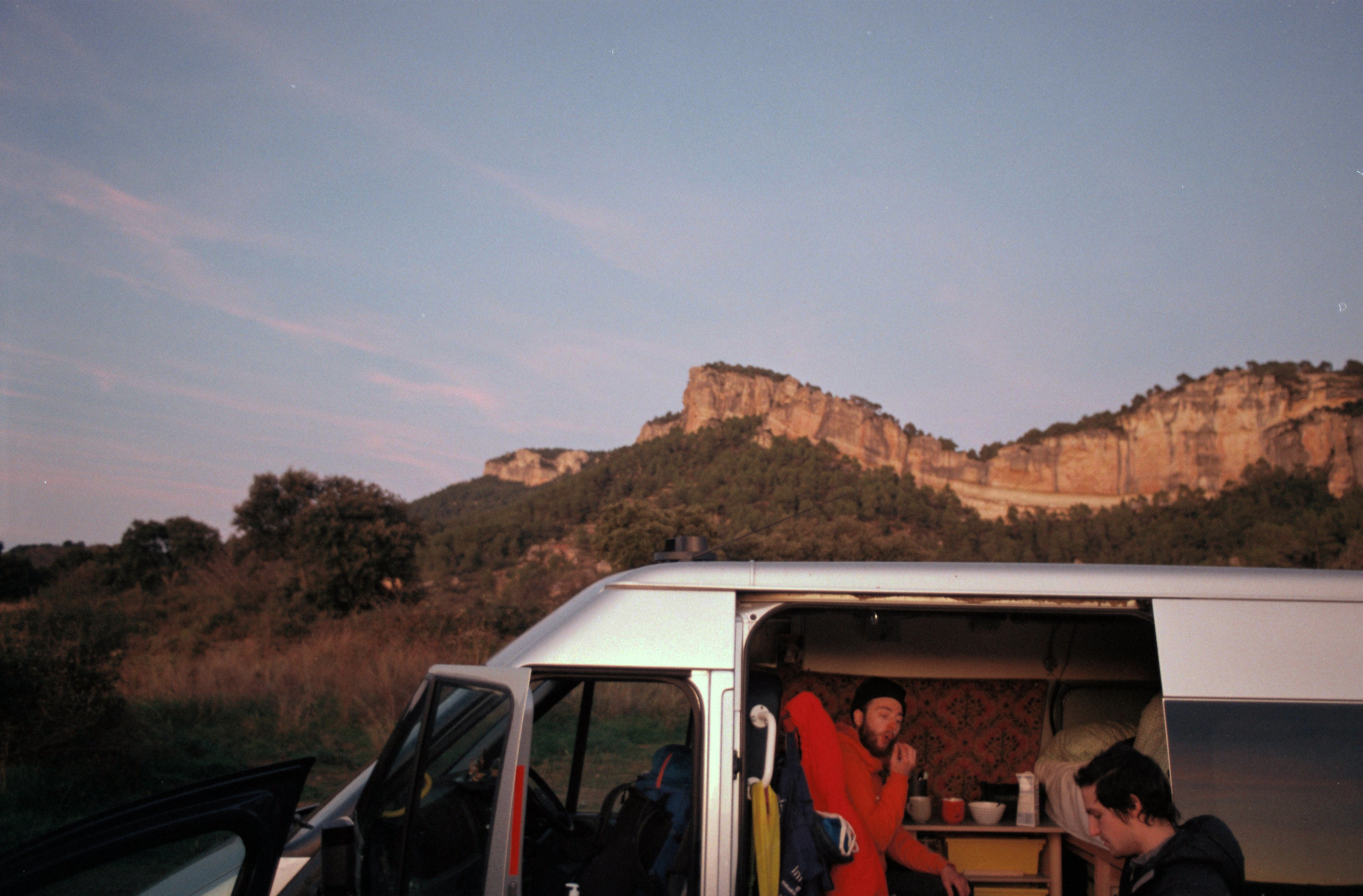
Our spot was conveniently near to the village bakery, so we played with a dog for a bit and stopped for chocolate covered breakfast things before winding past the panta and up, up, up towards Siurana village itself – and the climbing – picking up Tim from van city along the way.
Van city
We spent one night at the enormous layby on the road up to Siurana village. Van city is owned by Francisco, a 70-something year old gentleman who grew up on the local olive groves and played football for Margalef in his youth. Every morning he does the rounds on his layby and welcomes the campers to his kingdom. Rumour has it he owns the bakery in Cornudella that does well from the climbers, which is why he’s happy for them to stay in his layby for free.
Van city can get busy and, when you venture beyond the gravelled confines of the layby, you’re in mortal danger of stepping in shit left by careless wild-pooers. After one night we moved to a more modest layby where we set up camp with Andy and Jo – a British couple on a three month trip, Tim, and Bailey the prancing dog.

The layby community in front of their homes: Andy, Bailey the dog, Jo, Tim and Seb
Siurana Climbing
Its only round the mountain, but the rock in Siurana is completely different to that of Margalef. Forget pebbly pockety conglomerate, Siurana is the home of sharp, crimpy and technical limestone, with a band of incredibly soft, red sandstone crags below. Climbing in Siurana has seen extensive development – the first routes being bolted over 30 years ago – so it has suffered a fair bit of polish in places.
We’d spent our time in Margalef fighting off rest days so it was time for a day off. Rest day one took us to Can Toni Gros by accident. It was a lazy day – a grand total of three routes between us – and the style took some getting used to.
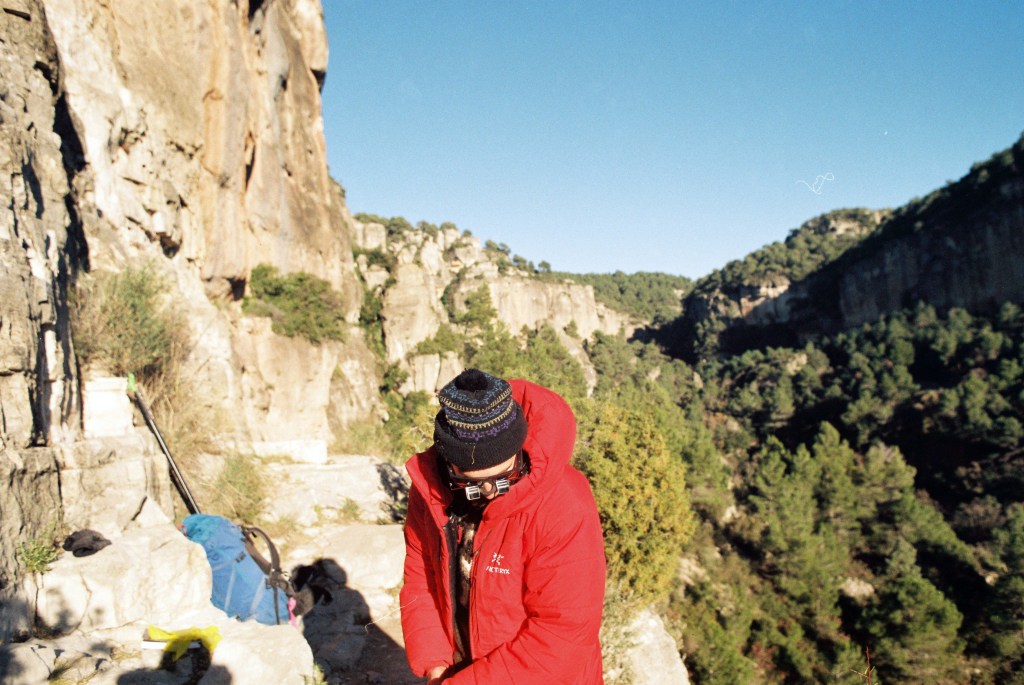
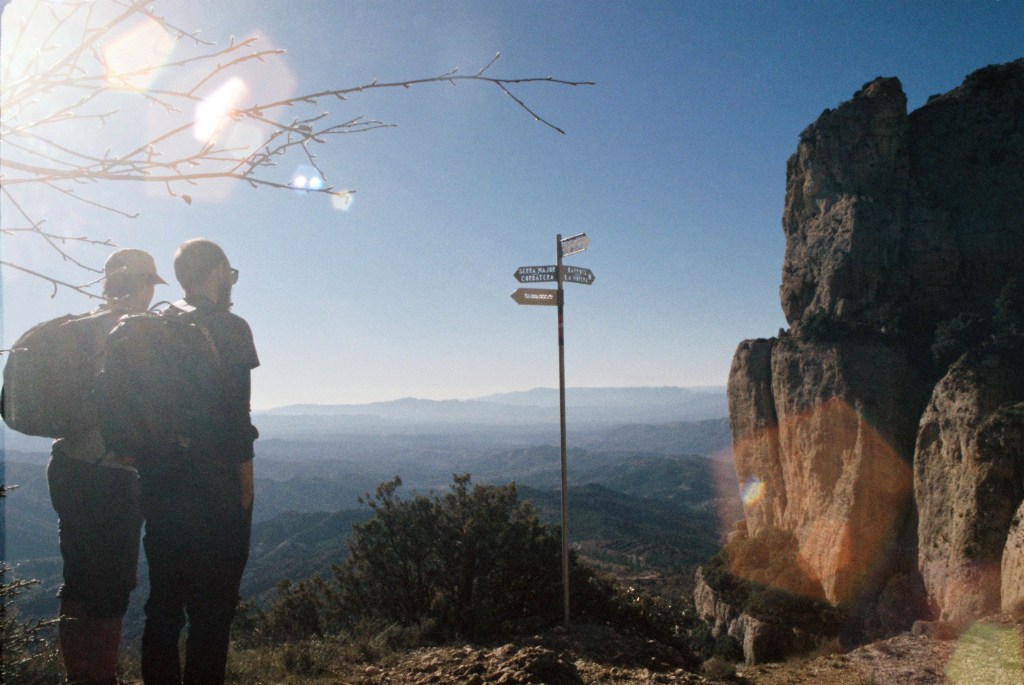
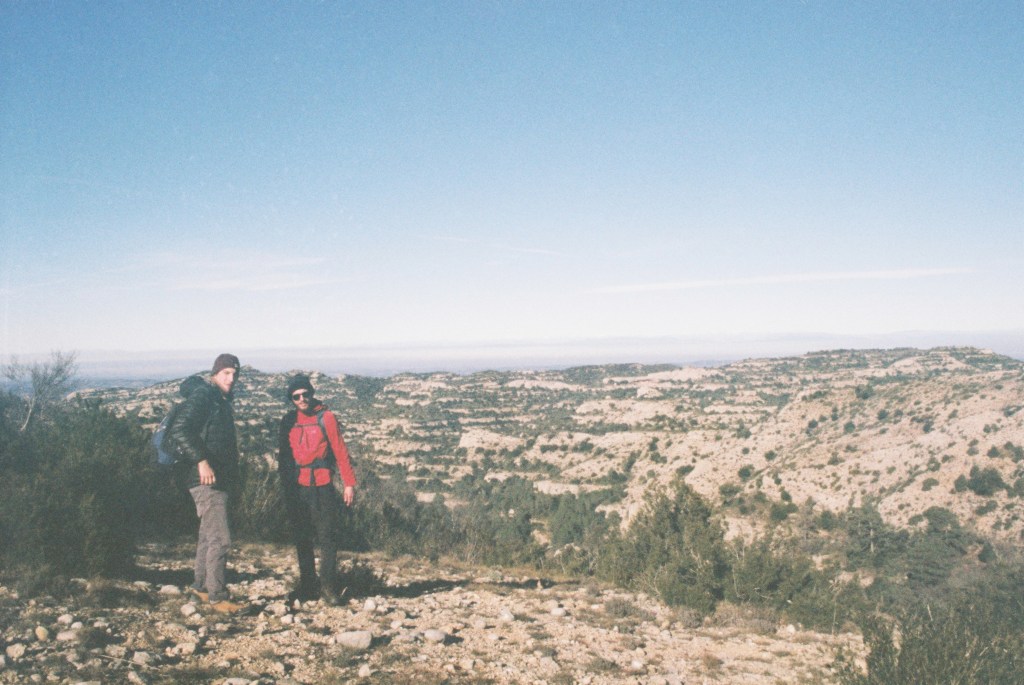
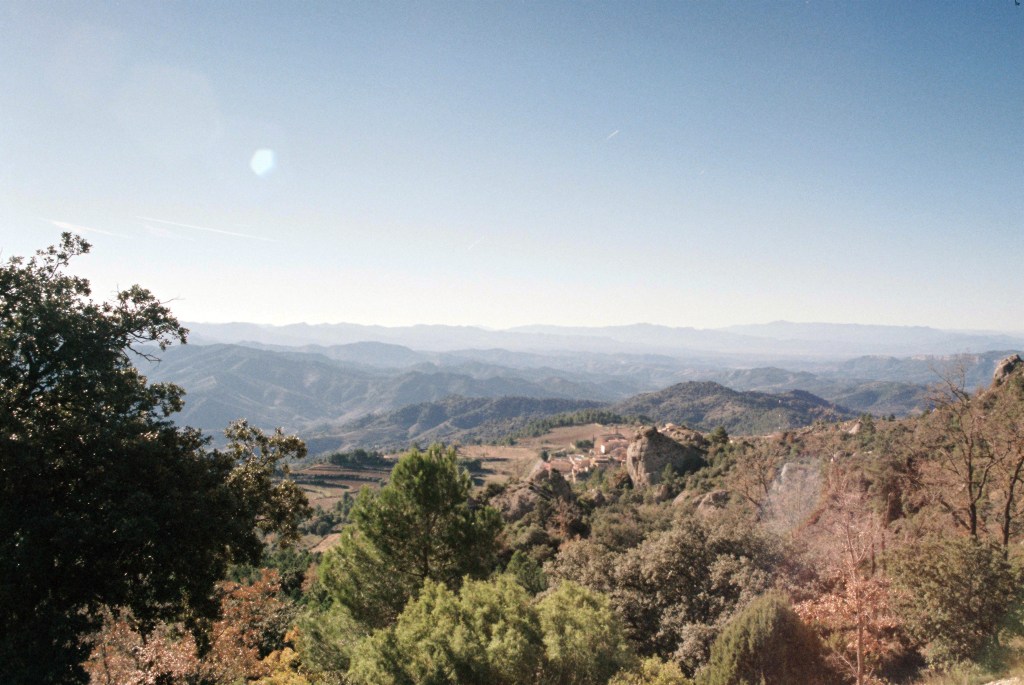
Rest day two was more successful, partly because it was a clean pants day and partly because we ate pancakes – woohoo! Morera de Montsant is the perfect place to rest your arms: we took the zigzagging paths up to the Serra de Montsant ridge, from where we could see the Med sea on one horizon and the Pyranees far off on the other. We rounded off the rest day with paella at the campsite down the road.


After a day off, we finally started to try a bit hard. El Cargol was a highlight: the enormous pillar rises 30 metres with climbs all the way up, we returned the next day for the redpoint. As always, we mixed classic routes with esoteric crags that have passed out of fashion, occasionally taking the path of least resistance up the wall and navigating enthusiastic plant life, otherwise opting for newly bolted blank crimp-fests. It was always fun to go to El Pati to watch the wads try hard.
Our last night in Siurana was the coldest night so far, falling to -6°C and freezing the contents of the van. But it was our last day of climbing, so we packed up sharpish to get the most out of our final day of climbing. It was windy, but we went braved the wind at Siurenella nonetheless. Arros de Llamantol (6a) was a notably fun warm up, although being in the shade it didn’t really warm you up… It took a Verdon-esque line following a corner up the wall with some disconcerting and awkward bridging.

Seb on the final route of the trip: Filiprim 

Siurana’s soft red sandstone
We passed through snow, sun, rain, a s and a really weird burning smell on our way back up to Dunkirk. The journey ended surrounded by fancy-dress clad party-goers in a greasy spoon somewhere on the Franco-Belgian border, which is all we had ever wanted really.
Facilities
- In the winter it’s too cold (for us) to swim in bodies of water, so we showered in Camping Siurana (owned by Toni Arbones himself). It around 3 euro for 3 – 4 minutes. Well worth it when there are two of you staying the van. It felt so so special and luxurious to be clean.
- When we couldn’t use public toilets, we ventured far off the beaten track and dug cat holes to make number twos in. (Read more on pooing outdoors here).
- Recycling points are available in most towns, please carry your own litter out with you!
Access
- Most of the crags are on private land and access depends on good behaviour from climbers. Currently the biggest threat to access is human waste (poo). Please poo responsibly!
- If you are van camping in a layby, try to contribute to local businesses or at least the bolt fund. One chain anchor can cost around $20, which adds up to quite a lot if you consider that there are somewhere around 1750 routes in Siurana.
Guidebooks
There are two main guidebooks for Siurana – both published in 2018. Although the Toni Arbones edition has a beautiful cover, we judged our guidebook by the photo topos and opted for the David Brasco edition instead.

 Hati Whiteley