
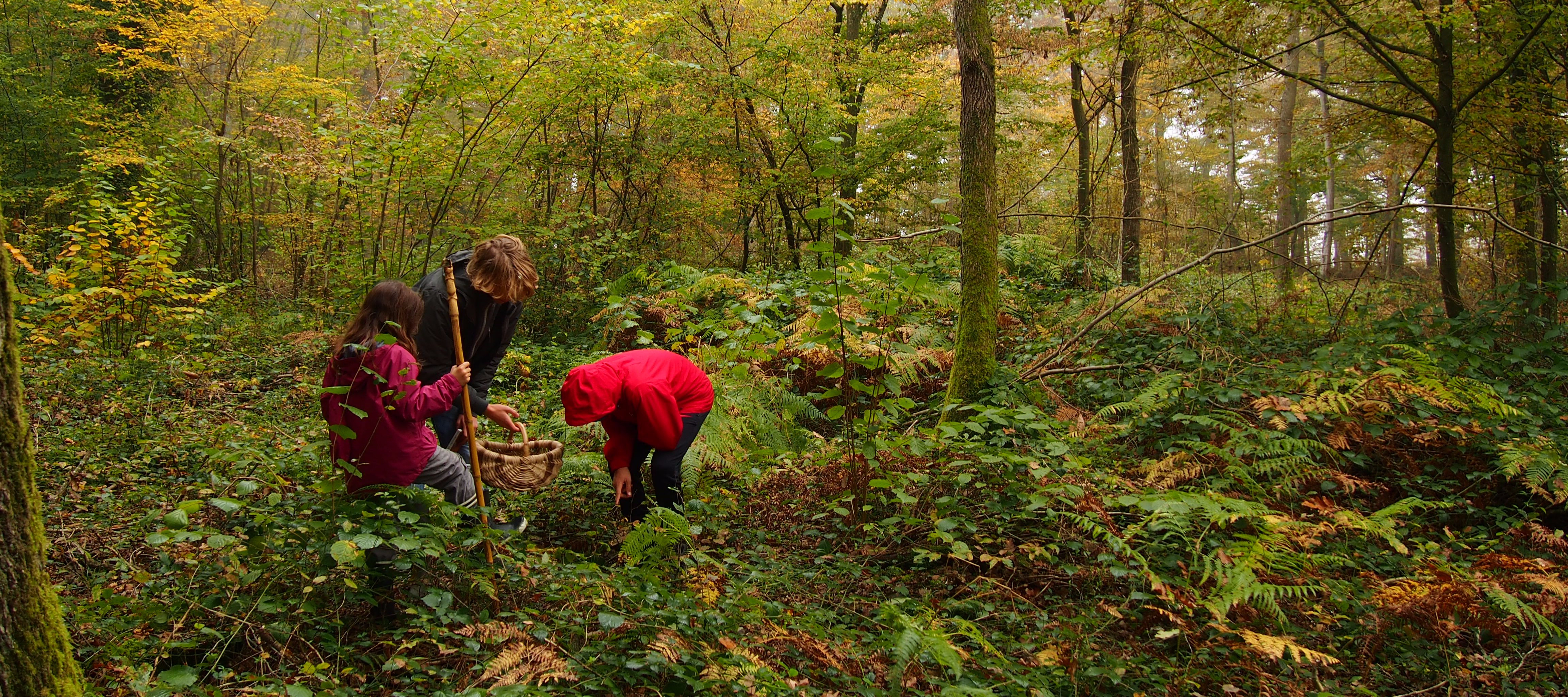
As cliched as it seems, I have never felt as connected to nature as when living and working in the middle of the forest of Fontainebleau. The simplicity and unconventional working hours of an Au Pair certainly helped; giving me ample daylight hours to explore the forest and try new activities, such as foraging. However I soon realised that, as much as I enjoyed my ‘connection with nature’, certain seemingly harmless practices cause damage to our forests and the wildlife that inhabits them. Foraging might just be one of those practices.
Nothing beats the end of summer in the forest, the trees succumbing to Autumn and transforming the landscape; their fiery leaves tumbling to the ground with every gust of wind and crunching and crackling under your feet as you walk. This is also when the forest is at its busiest, buzzing with basket wielding gourmands combing the undergrowth in search of supper. An enormous treasure hunt has begun.
The first rule of fight club…
One of the thrills of foraging for mushrooms is you feel like a member of an exclusive club. Everyone’s hunting for mushrooms; everyone knows that everyone’s hunting for mushrooms; but no one talks about it. To give an example, my French teacher once compared asking someone the location of their mushroom patch to asking for their bank pin. The savviest of mushroom foragers take great care to look like they aren’t mushroom foraging: not content just to withhold the location of their patch, friends have recounted stories of concealing their most precious harvests in their t-shirts or below a layer of chestnuts in their basket, among other arguably excessive measures, to avoid revealing their mushroom goldmines. It’s highly inaccessible, and getting started without help usually means investing a lot of time and effort, unless you’re really really lucky.
I just happen to be lucky. Requiring neither time nor effort to secure my place in the mushroom collecting community, I was invited to scour the forest for dinner with my host family. Harvest was admittedly meagre but nonetheless we wandered home through the woods feeling perhaps a little too proud of our single mushroom.
Having never foraged before, I had never considered the need to limit our impact on plants and wildlife. To be honest I just thought you picked stuff. All the same I began to get excited about the prospect of writing some kind of Ode to Foraging. Unfortunately my plans were thwarted as on further research I hit a snag. Foraging is becoming popular, too popular.

Formerly a quirky hobby practised by country bumpkins and some ‘off-grid’ urban dwellers; in a matter of years foraging has gone from an alternative sub-culture to a mainstream fad as a new wave of health fanatics hit the rural and urban green spaces in search of their supper. ‘Food forests’, foraging restaurants, and foraging walking tours are cropping up all over the country. Thanks to the rise in demand for fresh foods and produce, an overwhelming desire to ‘reconnect with food’, and the general consensus that things just taste better when you’ve picked them yourself, foraging has seen a revival.
This foraging frenzy has led to doubts about its sustainability.
The first major concern is that people aren’t foraging responsibly. In many cases this is accidental: many inexperienced foragers are unaware of the measures they should be taking to forage responsibly. Solving this issue is a matter of educating the public. Organisations such as the Woodland Trust offer guidelines on how to collect conscientiously, such as only harvesting only from plentiful collections; never picking rare species; and never putting things in your mouth when you don’t know what they are (which quite frankly just seems like common sense).
We can offer guidelines but we can’t force people to adhere to them; and more and more individuals are beginning neglect these guidelines in the name of financial gain. Commercial foragers pick wild foodstuffs to sell to restaurants, have earned a reputation for selfish foraging practices and are often accused of taking entire collections to sell. This reputation isn’t always merited, however the practice of profiting from wild plants in this way is becoming a growing concern as it often has a destructive impact on forest biodiversity. Such negligence isn’t limited to commercial activity, the fact that we came across very few edible mushrooms during our outing shows that many recreational foragers probably weren’t following the guidelines either, leaving little food behind for wildlife.
A more problematic concern is that an influx in foraging is completely unsustainable, even if we all demonstrated perfect forest etiquette. This is in part due to our static lifestyles; historically hunter-gatherer societies have been nomadic, giving plant and wildlife the chance to recover from brief periods of human foraging when they move on. In addition, the transition from a hunter-gathering society to an agricultural one, known as the Agricultural Revolution, made it possible for the human population to grow and for cities to develop at the expense of the environment. In order to produce enough food for our growing population we have taken measures such as deforestation, damn building, irrigation, controlled flooding and pesticide use, all of which have completely transformed our natural landscape. As a result, the forests and non-arable lands that remain are unable to support heavy foraging.

So having dipped my toe in the water, I’ve decided to withdraw from the foraging community. As much as I enjoy being outdoors and eating nice food, it doesn’t feel worth it to contribute to the increasing traffic of foragers in our forests and green spaces. I’ve also discovered other ways to make the most of the countryside all the while leaving the food and habitats of wildlife undisturbed, such as documenting interesting plants and animals by taking photos instead of taking them home. As for picking my own food, all is not lost: I’ve decided that a happy middle-ground is to grow fruit on the balcony of my flat so that I can reap the benefits of home grown produce without disturbing the biodiversity of our forests.
Whilst researching for this article I learned a lot about the Agricultural Revolution. If you’re interested in finding out more, try this light-hearted video from the Crash Course World History series. It’s definitely worth a watch!

 Hati Whiteley